Bentonite processors often choose bentonite granules as a uniform form for foundry sand, drilling mud, cat litter, and fertilizer additives. A double roller extrusion granulator presses the powder between two rollers and forms compact pellets without a steam dryer. You can prepare the powder through crushing, mixing, extrusion, screening, and packing in one fertilizer manufacturing system. When you produce bentonite granules, you evaluate feed fineness, moisture, roller pressure, and granule strength.
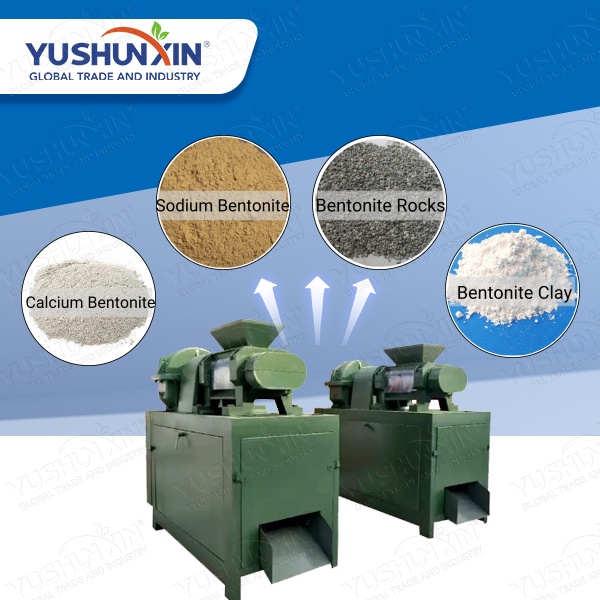
bentonite granules
Which moisture range helps bentonite granules form without sticking or crumbling?
A controlled moisture range helps bentonite granules system form without sticking or crumbling. Bentonite powder that is too dry creates dust and weak pellets, while powder that is too wet produces soft granules. You can add water in the mixer before the roller press or add dry material when the feedstock is too moist. A horizontal mixer distributes the moisture evenly, so the extrusion process stays stable. This step protects the fertilizer machinery and improves the fertilizer manufacturing process.
How does a bentonite granules line turn powder into pellets and prepare them for packing?
A bentonite granules line turns powder into pellets by feeding the material between two rotating rollers, which compress it into dense sheets or shaped granules. You can then screen the product and send oversized material back to the crusher. Organic fertilizer extrusion technology follows the same dry pressing principle, so the layout stays simple and does not require a large drying section. The finished bentonite granules move to a packing machine for bags or bulk containers.
Which crusher and mixer preparation improve bentonite granule uniformity?
A chain crusher and a horizontal mixer improve bentonite granule uniformity before the roller press. You can crush hard bentonite lumps to a small size, then mix the powder with water or a binder until the material reaches a consistent state. The roller press then applies even pressure and forms pellets with a stable shape. You can compare these preparation steps with the general principles of organic fertilizer processing when you plan a low-moisture granulation line. This sequence supports continuous fertilizer extrusion line operation.
Which packing options suit bentonite granules after screening?
After screening, bentonite granules can move to a single-bucket packing scale for small batches or a full automatic packing line for high output. You can choose bag sizes according to the customer requirement and seal the packages for storage. A rotary dryer can remove residual moisture when the granules need a lower final water level. This packing stage keeps the fertilizer processing plant efficient and reduces manual transfer.
To summarize, bentonite powder becomes uniform granules through crushing, mixing, dry roller pressing, screening, and packing. This dry method also reduces water use and shortens the material path before final packaging. You can match the roller press and packing machine to the required output and moisture level. A fertilizer machinery manufacturer can help you configure the bentonite granulation system. Yushunxin provides this bentonite granulation equipment for powder processors. If you have interests, you can learn more about https://www.extruder-granulator.com/product/bentonite-granulator