Which Fresh Produce Can Be Processed Efficiently with an Industrial Vegetable Blanching Equipment?

A frozen vegetable plant, a French fries factory, or a fresh produce processor that adds blanching needs a machine that matches the product and the output. The industrial vegetable blanching equipment for fresh produce stabilizes color and reduces raw odor, and the product range follows the blanch. This article explains which fresh produce the equipment handles for a food processing line.
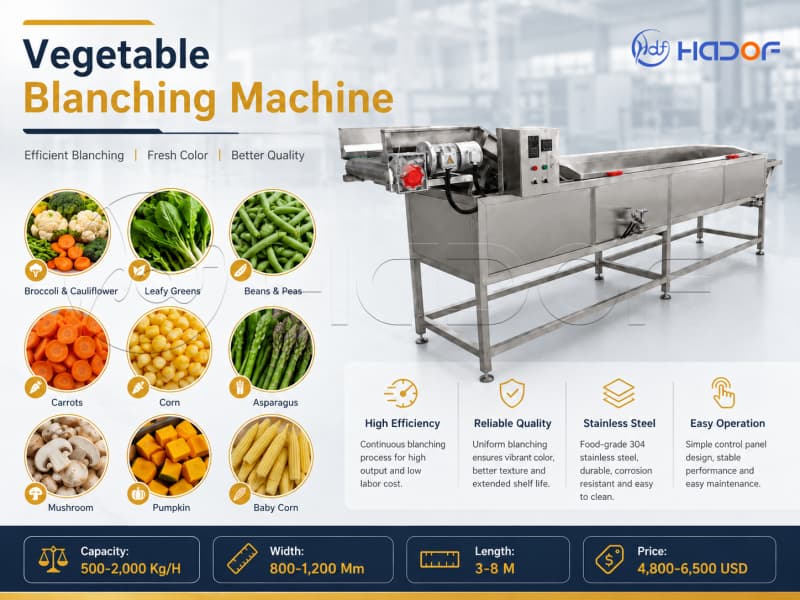
industrial vegetable blanching equipment

How Does Blanching Prepare the Produce?

The blanching step sets the color and the texture, so the produce holds its quality through frying or freezing. The automatic vegetable blancher for fresh produce keeps the water at a steady temperature for an even blanch. This step is the food preparation that a fresh produce line needs.

How Does the Heating Method Fit the Produce?

The equipment supports electric, steam, and gas heating, and a buyer picks the source that fits the utility and the product. The industrial blancher with electric, steam, or gas heating holds the temperature for the batch. This choice is a core food manufacturing cost driver.

How Does the Blancher Connect With Drying and Freezing?

A blancher works best when the blanched produce moves directly to draining, drying, and freezing, because a warm hold lets moisture return. The machine connects with a quick freezer for blanched produce, a drainer, and a packer. A smooth connection keeps the food processing system efficient.

How Should a Buyer Match the Capacity?

The equipment comes in capacities around 500, 1,000, or 2,000 kg/h, so a buyer matches the blanch to the daily output. A small plant starts with a lower capacity and grows. This match keeps the food machinery cost proportional to the volume.

How Should a Buyer Verify the Equipment?

Blanching rewards a trial with the plant’s own produce, because size and moisture change the time. You can review the vegetable blanching equipment manufacturer before a purchase, and that review shows the heating and service. A measured run turns the food machinery decision into a dependable choice.

How Does Blanching Improve Fry Quality?

The blanch stabilizes the color and reduces the raw odor, so the produce fries to an even golden color and holds a better texture. A stable blanch also lowers the oil the fryer absorbs, which protects the final yield. This quality benefit is the food manufacturing value that the cost supports. A buyer who checks the blanch result sees the machine as a quality control rather than only a line item.

Conclusion

Industrial vegetable blanching equipment processes fresh produce efficiently when the buyer matches the heating method and the capacity to the product. These choices keep the food production line steady and the produce even. A stable blanch therefore keeps the color and the texture consistent. This quality also shortens the frying time and lowers the oil the product absorbs. A buyer who checks this benefit makes a more complete food machinery decision. The cooling section then keeps the produce firm before the next stage. If you have interests, you can learn more about https://www.friedfoodsolutions.com/vegetable-blanching-machine/

How Do You Size an Industrial Root Crop Washing for a 100-300 KG/H Processing Line?

A potato plant, a carrot processor, or a root vegetable factory that plans a 100 to 300 kg/h line needs a washing process sized to that throughput. The industrial root crop washing for a 100-300 kg/h line joins soaking, bubble washing, brush washing, and spray rinsing, and the sizing follows the soil and the crop. This article explains how a buyer sizes the wash for a food processing line.

industrial root crop washing

Which Washing Stages Fit a 100-300 KG/H Line?

A 100 to 300 kg/h line fits a compact washing setup, and the stages cover soaking, bubbling, brush washing, and spray rinsing. The root vegetable washing process with soaking and brush stages loosens the soil in the soak and scrubs the roots in the brush washer, so the product leaves clean. A buyer who maps these stages keeps the food machinery sized to the volume.

How Do Soaking and Brush Washing Work Together?

The soak softens the mud and lifts the loose soil, and the brush roller then scrubs the uneven surface of the potato or carrot. The multi-stage root crop washing machine for potatoes and carrots uses a spray rinse after the brushes, so the dirt leaves the line instead of staying on the surface. This staged flow is the food manufacturing clean that a single wash cannot reach.

How Does the Line Connect With Peeling Equipment?

A root washing line works best when the washed roots move directly to peeling, because a manual handoff reintroduces labor and moisture. The line connects with a brush peeling machine for a root washing line, a cutter, and a dryer. A smooth connection keeps the food processing system moving and the surface ready.

How Should a Buyer Match the Capacity?

A buyer matches the wash capacity to the daily root volume, because a 100 to 300 kg/h line needs a smaller setup than a large plant. The stages scale to the output, so the plant picks the size that fits the peeler and the dryer. This match keeps the food equipment cost proportional to the real volume.

How Should a Buyer Verify the Sizing?

Root crop washing rewards a trial with the plant’s own crop, because soil and skin change the wash time. You can review the root crop washing equipment manufacturer before a purchase, and that review shows the stages and service. A measured trial turns the food machinery sizing into a dependable 100-300 kg/h plan.

How Does the Spray Rinse Finish the Clean?

The clean water spray removes the last soil that the brushes loosen, so the roots leave the line with a clean surface ready for peeling. This final rinse also carries the sand out of the line, which keeps the downstream water clean. A plant that holds the spray steady protects the food preparation quality. This rinse is the last food manufacturing step that completes the wash.

Conclusion

A buyer sizes an industrial root crop washing for a 100 to 300 kg/h line by matching the soaking, brush, and spray stages to the crop and the volume. These choices keep the food production line clean and balanced. If you have interests, you can learn more about https://www.hadofps.com/tech/root-vegetable-washing-cleaning-process/

How Can a Factory Optimize a Leafy Vegetables Cutting Machine to Improve Finished Product Quality?

A salad factory or a fresh-cut vegetable plant that runs a leafy cutting machine finds that finished quality follows the blade, the belt speed, and the cleaning routine more than the machine name. The leafy vegetables cutting machine for finished product quality slices, shreds, or chops washed greens, and a few operating choices keep the cut clean and uniform. This article explains how a factory optimizes the cutter to protect food preparation quality.

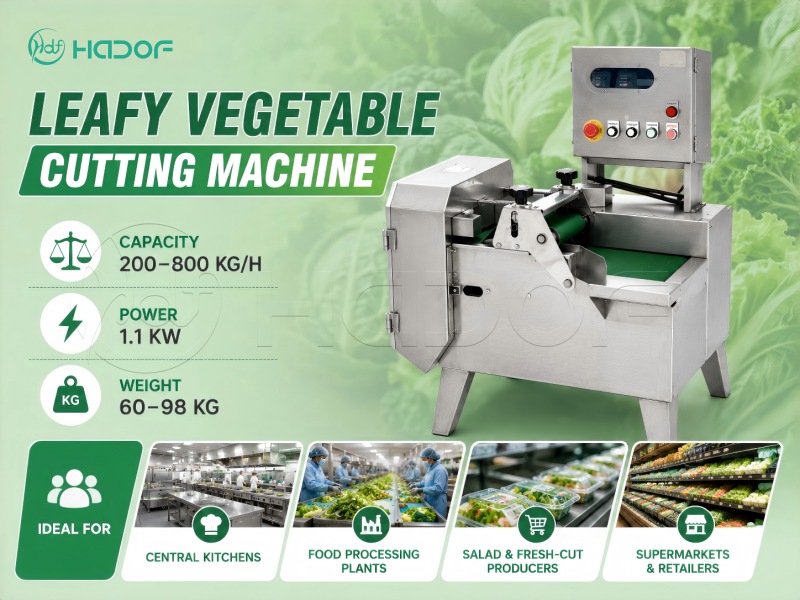
leafy vegetables cutting machine

How Does Speed Control Improve Cut Uniformity?

The frequency inverter sets the belt and knife speed, and that setting decides how long each leaf stays in the cutting chamber. The adjustable speed leafy vegetable cutter for uniform size produces a consistent size across a batch, which keeps salad portions and cooking times even. Washed lettuce, spinach, cabbage, and celery move from the inlet through the knife group and out the discharge chute without hand trimming. A steady speed therefore protects both the food preparation size and the yield.

How Does a Clean Knife Group Preserve Quality?

A sharp, clean knife group cuts the leaf instead of tearing it, so the cut edges stay clean and the product holds less moisture loss. The stainless steel leafy greens cutting machine for salad allows quick disassembly of the belt guard and knife cover, so operators can clean the blades between shifts. A dull blade crushes the leaf and shortens shelf life, while a clean blade keeps the food manufacturing result crisp. This routine is the first optimization a factory should lock down.

How Does the Cutter Connect With Washing and Drying?

A cutting machine works best when clean, drained leaves arrive on the belt and the cut pieces leave directly to washing or drying. The line connects with a washing machine upstream and an air dryer for cut leafy greens downstream, and each handoff needs a matched height and speed. A smooth connection removes the manual transfer that bruises cut leaves. This layout keeps the food processing system moving without a quality drop between stages.

How Should a Factory Match the Model to the Volume?

Model choice matters because a small kitchen and a salad factory need different capacities and footprints. Model 802 processes about 300 to 800 kg/h while Model 803 handles about 200 to 500 kg/h, and both fit compact workshops. A factory that matches the model to its daily volume avoids running a large cutter at half load or a small cutter beyond its speed. This match keeps the food machinery steady and the cut size consistent.

How Should a Factory Verify Quality Before Purchase?

Leafy greens cutting rewards a trial with the factory’s own leaves, because wetness and stalk size change the cut. You can review the leafy greens cutting equipment manufacturer before a purchase, and that review shows the stainless steel build and the service behind it. A careful buyer checks the blade, the speed, and the cleaning access. These steps turn the food machinery decision into a quality result.

Conclusion

A factory optimizes a leafy vegetables cutting machine by setting the speed for uniform size, keeping the knife group sharp and clean, and matching the model and the line connections to the real volume. These choices protect the finished product quality. If you have interests, you can learn more about https://www.hadofps.com/products/leafy-vegetable-cutting-machine/